Political polarization in the US is characterized by the increasing divide in political beliefs, fueled by partisan media, leading to decreased dialogue and collaboration, undermining democratic processes and societal cohesion.
Political polarization in the US has become a striking characteristic of contemporary politics. Have you noticed how it affects discussions, choices, and even relationships? Let’s delve into this complex issue and see how it shapes our lives.
Understanding political polarization
Understanding political polarization is essential to grasp how it shapes our society. This phenomenon occurs when political opinions become more extreme, making it challenging for individuals to engage with differing views. How did we get here, and what does it mean for our future?
The roots of political polarization
Several factors contribute to this divide. One major reason is the influence of the media. Today, many people choose news sources that align with their beliefs, creating echo chambers.
- Individuals tailor their news consumption.
- Social media algorithms promote similar content.
- Partisan news outlets reinforce extreme views.
Another aspect is the growing ideological gap between political parties. As views shift further apart, collaboration and compromise become increasingly difficult. Understanding these roots helps to clarify why discussions can be so heated.
Effects on society
The impact of political polarization can be seen in various areas of life. For example, it affects our interactions, making civil debates rare. Many people find it challenging to talk about politics without conflict. This tension is prevalent in workplaces, families, and social gatherings.
- Relationships suffer from heated disagreements.
- Public trust in institutions declines.
- Extreme partisanship leads to gridlock in government.
Moreover, polarization can influence policy-making, as politicians cater to their base rather than seeking common ground. This can hinder progress on important issues, as solutions often require cooperation.
Ultimately, recognizing the nuances of political polarization allows us to engage more thoughtfully with others. By understanding its roots and effects, we can approach discussions with empathy and open-mindedness.
Historical context of political divides
The historical context of political divides in the United States is crucial for understanding today’s polarization. Throughout history, various events and movements have influenced the way Americans perceive politics. From the founding of the nation to the present day, these moments have shaped the political landscape.
Founding Principles and Early Divides
When the United States was founded, there were significant debates about governance, representation, and individual rights. The Federalists and Anti-Federalists disagreed on the balance of power between state and federal authority. These early conflicts set the stage for ongoing ideological battles.
- The Federalists favored a strong central government.
- The Anti-Federalists advocated for states’ rights.
- This tension laid a foundation for future political parties.
As time progressed, the issue of slavery created even deeper divides. The Northern states, with their industrial economy, and the Southern states, reliant on agriculture with slave labor, had fundamentally different interests.
Major Events that Deepened the Divide
Several key events intensified political divides during the 19th century. The Civil War and Reconstruction drastically changed the socio-political climate. The aftermath of the war led to new rights for African Americans but also to fierce resistance in the South.
- Jim Crow laws enforced racial segregation.
- The Civil Rights Movement challenged systemic inequalities.
- These struggles highlighted the ongoing divisions in American society.
In the 20th century, wars and economic changes continued to shape political ideologies. The Cold War fostered a climate of suspicion and fear, influencing public opinion on communism and capitalism. This impacted domestic policies and increased partisanship.
Every significant event has contributed layers to the current political polarization. Knowing this history helps explain why certain values and beliefs are so deeply entrenched today. It illustrates how our past continuously influences our present political climate.
Impact on American democracy
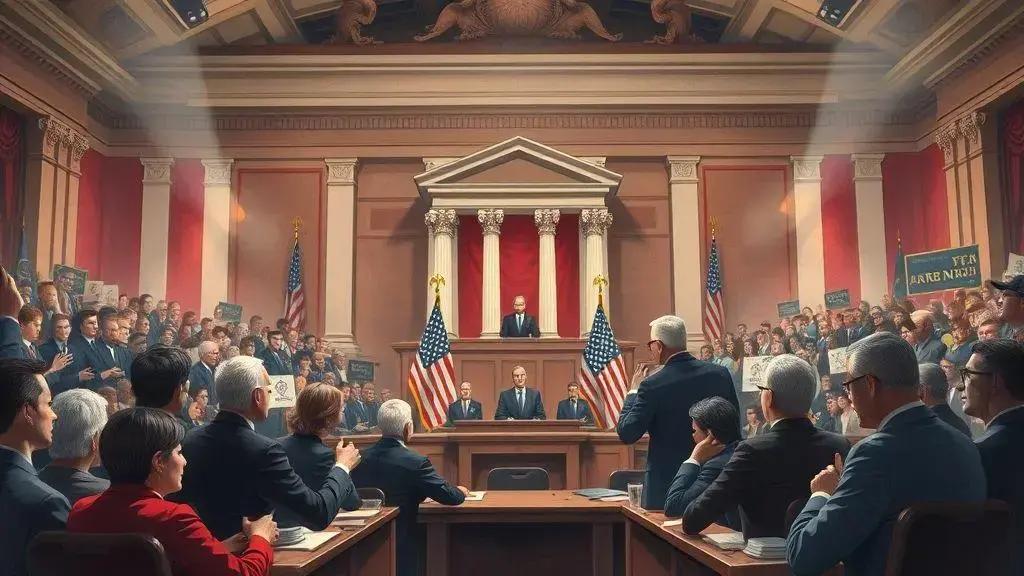
The impact of political polarization on American democracy is profound. It shapes the way citizens engage with politics and alters the functioning of democratic institutions. As polarization deepens, it becomes increasingly challenging to achieve consensus on critical issues.
Disruption of Political Dialogue
One significant effect is the decline of civil discourse. When people are entrenched in their viewpoints, meaningful conversations become rare. Many avoid discussions with those who hold opposing beliefs. This lack of dialogue can lead to misunderstandings and increased animosity.
- Voters may choose parties over personal relationships.
- Debates often devolve into arguments rather than constructive exchanges.
- Trust in fellow citizens diminishes as differences grow.
The way people consume news also contributes to this polarization. Many individuals rely on sources that reinforce their beliefs, further entrenching them in their positions. This can lead to a cycle where misinformation spreads, and citizens become less informed about opposing perspectives.
Effect on Governance
Political polarization can even hinder the ability of government institutions to function effectively. When lawmakers prioritize party loyalty over collaboration, it can lead to legislative gridlock. Critical issues, such as healthcare and climate change, often go unaddressed due to this stalemate.
- Partisan conflicts can delay essential policies.
- Government shutdowns can occur over budget disagreements.
- The political climate can create fear and anxiety about future governance.
Moreover, this polarization affects voter turnout and engagement. Some individuals may feel disillusioned with the political process, believing their voices are drowned out by extreme factions. As a result, participation in elections could decline, further weakening the democratic process.
Political polarization challenges the core values of democracy, such as compromise, discussion, and cooperation. Recognizing these impacts is vital for fostering a healthier political environment where diverse opinions can coexist. Understanding the significance of these issues can pave the way for more constructive engagement in our democratic system.
Media’s role in fueling polarization
The media plays a critical role in fueling political polarization in the United States today. The way information is presented can significantly influence public perception and opinion. Understanding how media contributes to polarization is essential for recognizing its impact on society.
Choosing Sides
Many media outlets have become increasingly partisan. This means they often report news in a way that aligns with specific political ideologies. As a result, people tend to consume news that confirms their existing beliefs. This selective exposure deepens the divide between different political groups.
- Viewers are drawn to outlets that reflect their views.
- Partisan media can create a polarized narrative.
- People may not seek out diverse viewpoints.
As a consequence, discussions around key issues become less informed and more emotionally charged. People may find it difficult to engage with differing opinions, as their news sources validate their own perspectives while dismissing others.
Impact of Social Media
Social media has further amplified the effects of media polarization. Platforms like Twitter and Facebook often prioritize content that generates strong emotional reactions. This can lead to the spread of sensationalized news and misinformation, making it hard for users to separate fact from fiction.
- Algorithms tend to promote divisive content.
- Echo chambers form, reinforcing extreme views.
- Users may interact primarily with like-minded individuals.
This creates a feedback loop where polarized views are continuously reiterated. The more people engage with certain types of content, the more they see it. This cycle adds to the overall divisiveness in political discussions.
Moreover, the pressure to capture audience attention encourages sensationalism. Media outlets may focus on the most controversial aspects of a story rather than presenting a balanced view. This can distort public understanding of critical issues, further entrenching ideological divides among citizens.
Recognizing the media’s role in fueling political polarization is vital. By becoming more aware of how media choices shape our views, we can begin to seek out diverse perspectives and encourage more constructive dialogue.
Strategies to bridge the divide
Finding strategies to bridge the divide caused by political polarization is crucial for fostering a more cohesive society. These strategies can help individuals engage in more productive dialogues and create a healthier political environment.
Encouraging Open Dialogue
One effective way to bridge the divide is to encourage open dialogue. This means creating spaces where people can express their views without fear of conflict. Discussions should focus on understanding rather than winning an argument. Active listening is a key part of this process.
- Listen to others without interrupting.
- Ask questions for clarification to ensure understanding.
- Summarize what you heard before responding.
By fostering an atmosphere of respect, individuals are more likely to engage thoughtfully, which can reduce hostility over time. When people feel heard, they may be more willing to consider different perspectives.
Promoting Education on Issues
Another strategy involves promoting education on divisive issues. Having accurate information is vital for constructive conversations. Organizations and communities should provide resources that help clarify complex subjects.
- Host community workshops on key topics.
- Utilize unbiased educational materials.
- Encourage individuals to seek knowledge from multiple sources.
When people are better informed, they can engage in discussions with a more balanced perspective. This education can also dispel myths that might fuel polarization.
Furthermore, collaborating on community projects can help individuals build connections. When people from different backgrounds work together, they often find common ground. Shared goals can unite individuals and shift the focus away from political differences.
Volunteering for local causes or participating in town hall meetings helps cultivate a sense of community. These experiences enrich relationships and can lead to increased understanding and empathy among citizens.
Ultimately, implementing these strategies to bridge the divide requires commitment from individuals and communities alike. By encouraging open communication, promoting education, and fostering collaboration, society can work towards overcoming polarization.
In conclusion, addressing political polarization requires effort from individuals and communities. By encouraging open dialogue, promoting education on critical issues, and fostering collaboration, we can bridge the divide that separates us. Emphasizing understanding and empathy among citizens is vital for re-establishing trust and a sense of community. Together, we can create a healthier political environment and work towards a more united society.
FAQ – Questions about Political Polarization and Bridging the Divide
What is political polarization?
Political polarization is the increasing divide between different political ideologies, making it harder for people to find common ground.
How can open dialogue help reduce polarization?
Open dialogue encourages respectful conversations where individuals can share their views and understand differing perspectives.
Why is education important in combating polarization?
Education helps people gain accurate information about issues, dispelling myths and fostering informed discussions.
What role does collaboration play in bridging divides?
Collaboration on community projects helps individuals from different backgrounds connect and focus on shared goals, reducing political differences.