AI in manufacturing enhances efficiency, automates processes, and provides data-driven insights, while also presenting challenges like high costs and skill gaps in the workforce.
AI in manufacturing is reshaping the industry, making processes smarter and more efficient. Have you ever wondered how these technologies can elevate production standards? Let’s dive in and find out.
Understanding AI in manufacturing
Understanding AI in manufacturing is essential to grasp how technology is transforming production techniques. As industries adopt these innovations, they experience significant shifts in their processes and efficiency.
AI is revolutionizing manufacturing by automating tasks and improving decision-making. This technology allows manufacturers to optimize operations and enhance productivity.
Key Concepts of AI in Manufacturing
Artificial intelligence encompasses various technologies that mimic human intelligence to execute tasks efficiently. Examples include machine learning, natural language processing, and robotics.
- Machine Learning: This involves algorithms that learn from data, enabling machines to improve over time.
- Robotics: Robots can perform repetitive tasks, allowing human workers to focus on more complex activities.
- Predictive Maintenance: AI can predict equipment failures, reducing downtime and maintenance costs.
- Quality Control: AI systems can automatically detect defects in products, ensuring higher quality standards.
By incorporating these technologies, manufacturers can ensure their operations are not only efficient but also adaptable to market changes. Moreover, AI offers deep insights through data analysis. Through real-time data monitoring, manufacturers can identify trends and areas for improvement.
The Role of AI in Decision Making
AI assists in making informed decisions based on vast amounts of data. This can significantly enhance strategic planning and operational efficiency. By utilizing AI systems, manufacturers can:
- Analyze consumer data for better product development.
- Improve supply chain management.
- Enhance production processes for better yields.
It’s evident that the integration of AI in manufacturing not only fosters innovation but also drives competitiveness. As industries evolve, understanding AI’s role becomes vital for sustaining growth and efficiency. Manufacturers that embrace AI technologies stand to reap substantial rewards in the ever-evolving marketplace.
Key benefits of AI integration
Integrating AI into manufacturing brings a wealth of benefits that can dramatically enhance operational efficiency and competitiveness. These advantages are pivotal for businesses looking to thrive in today’s fast-paced market.
Increased Efficiency
AI systems can streamline processes, reducing waste and time. By automating routine tasks, manufacturers can focus their resources on more complex problems. This efficiency enables quicker turnaround times and reduces production costs.
- Automation: AI can handle repetitive tasks seamlessly.
- Data Analysis: AI can quickly analyze large datasets to optimize production.
- Resource Allocation: Intelligent systems manage resources effectively to reduce excess.
Moreover, AI-powered machines can operate continuously without breaks, increasing overall output. This continual operation minimizes downtime, thus maximizing productivity.
Better Quality Control
Another significant advantage is enhanced quality control. AI systems utilize advanced algorithms to monitor production in real time. This capability allows for immediate detection of defects and issues, leading to higher quality products.
Manufacturers can ensure consistent quality, leading to increased customer satisfaction. With AI, the potential for human error decreases, as machines follow precise and predefined processes. Thus, the products are more reliable and meet higher standards.
Cost Savings
Integrating AI also contributes to significant cost savings. By optimizing processes, companies can reduce labor costs and improve the overall efficiency of equipment. Predictive maintenance, one aspect of AI, helps foresee equipment failures, allowing companies to address issues before they escalate.
- Maintenance Costs: Reducing unexpected repairs saves money.
- Labor Costs: Automation lessens the need for manual labor.
- Energy Savings: Efficient systems use less power compared to traditional methods.
As the technology evolves, the cost of implementing AI solutions continues to decline, making it more accessible for manufacturers of all sizes. Investing in AI today can lead to substantial long-term gains.
In conclusion, the benefits of integrating AI are immense. Increased efficiency, better quality control, and significant cost savings are just the beginning. As industries embrace these technologies, they are positioned to innovate and thrive in a competitive market.
Real-world applications of AI
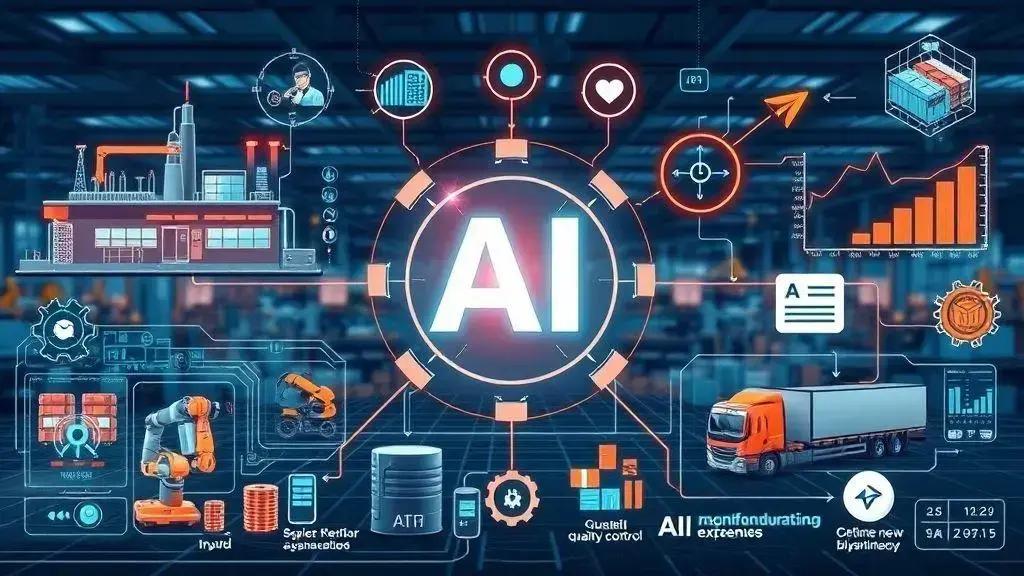
Real-world applications of AI in manufacturing are transforming industries globally. Businesses of all sizes are embracing AI technologies to increase productivity and optimize processes.
Smart Factories
One prominent application is the development of smart factories. These facilities utilize AI systems that enhance connectivity and automation. By integrating Internet of Things (IoT) devices, machines can communicate and coordinate tasks, leading to seamless operations.
- Process Automation: AI automates manufacturing processes, reducing the need for human intervention.
- Real-time Monitoring: Continuous data collection helps to track machine performance and product quality.
- Predictive Analytics: AI analyzes historical data to forecast outcomes and optimize production schedules.
Such advancements make production more efficient and less prone to errors, allowing companies to respond quickly to market demands.
Quality Improvement
Another crucial application is in quality control. AI systems identify defects and anomalies accurately and quickly. This technology not only improves the quality of products but also ensures that standards are consistently met.
Using computer vision and machine learning, AI can inspect products on the assembly line much faster than human workers. This leads to higher quality assurance and lower rejection rates. Additionally, AI helps in analyzing trends to improve production techniques further.
Supply Chain Optimization
AI also plays a vital role in supply chain management. By analyzing data, AI can forecast demand and optimize logistics, ensuring that items are produced and delivered just in time.
- Dynamics of Supply and Demand: AI analyzes consumption patterns to predict future needs.
- Inventory Management: AI maintains optimal stock levels, reducing waste and costs.
- Transportation Optimization: AI provides insights into the most efficient delivery routes.
This level of optimization reduces costs, enhances customer satisfaction, and supports sustainability efforts.
Overall, the implementation of AI in manufacturing has led to significant improvements in how industries operate. From smart factories to advanced quality and supply chain management, these applications of AI are setting the stage for a new era in manufacturing.
Challenges faced by the industry
The manufacturing industry faces several challenges when it comes to implementing AI technologies. Adopting these innovations can be difficult due to cost, skill gaps, and integration issues.
High Initial Investment
One of the primary challenges is the high initial investment required to implement AI systems. Integrating advanced technologies can involve significant costs for hardware, software, and training.
- Cost of Technology: Sophisticated AI solutions often come with hefty price tags.
- Infrastructure Upgrades: Companies may need to upgrade existing equipment to work with AI systems.
- Training Expenses: Employees must be trained to work alongside AI technologies.
While these costs can be challenging, they are often offset by long-term savings and efficiencies gained through automation.
Skill Gaps in the Workforce
Another significant challenge is the skills gap within the workforce. As industries adopt AI, there is a growing demand for workers who possess the right technical skills.
Many traditional manufacturing jobs are evolving, requiring new skill sets that may not be readily available in the current labor pool. Companies face difficulties in finding workers who are proficient in data analysis, coding, and machine learning. This gap can hinder the successful implementation of AI.
Integration with Existing Systems
Integrating AI solutions with legacy systems can also pose challenges. Many manufacturing plants still operate with outdated technology, making it difficult to incorporate modern AI applications.
Transitioning to AI-driven processes requires intricate planning and execution to ensure compatibility and data flow between old and new systems. Disruption during this transition can affect overall production.
- Compatibility Issues: Older systems may not be compatible with new AI technologies.
- Data Management: Ensuring data integrity and accessibility is crucial during integration.
- Change Management: Adjusting to new workflows can lead to resistance among employees.
Despite these challenges, many companies are finding ways to navigate the complexities of AI adoption. By investing in training, addressing workforce skill gaps, and planning for integration, industries can leverage the benefits of AI while overcoming obstacles.
Future of AI in manufacturing
The future of AI in manufacturing looks promising, with rapid advancements set to revolutionize the industry. As technology continues to evolve, we can expect significant changes in how products are made and how businesses operate.
Increased Automation
One trend shaping the future is the rise of complete automation. Factories will increasingly rely on AI systems to handle complex tasks with minimal human intervention. This shift toward automation enhances efficiency and reduces human error.
- Fully Automated Production Lines: These lines will use AI-driven robots for various production processes.
- Real-time Adaptation: AI will enable systems to adjust in real time based on current data and conditions.
- Enhanced Safety: With automation, dangerous tasks can be assigned to machines, keeping workers safe.
Such advancements ensure that manufacturing processes become faster and more efficient.
Data-Driven Insights
As AI takes on a larger role, the importance of data analysis will continue to grow. Manufacturing will leverage big data to create more informed decisions. AI technologies can analyze vast amounts of data, revealing trends and insights that were previously hidden.
By understanding these data patterns, manufacturers can optimize their operations, enhance product quality, and better predict consumer demands. This data-driven approach allows for precision in planning and inventory management.
Personalization and Customization
Another significant shift will be the move toward personalized products. With AI, manufacturers can quickly respond to consumer preferences and customize offerings for individual customers.
- Mass Customization: AI will enable efficient production of personalized products at scale.
- Customer Insights: Analyzing consumer behavior helps businesses tailor products to meet specific needs.
- Flexibility in Production: AI systems will allow manufacturers to switch between product types with ease.
This capability leads to higher customer satisfaction and brand loyalty.
Overall, the future of AI in manufacturing promises to drive innovation and efficiency. Companies that embrace these changes will likely find themselves at the forefront of the industry, capable of meeting evolving market demands.
FAQ – Frequently Asked Questions about AI in Manufacturing
What are the main benefits of integrating AI in manufacturing?
Integrating AI can increase efficiency, improve quality control, and provide valuable data insights, leading to better decision-making.
How does AI enhance production automation?
AI automates routine tasks, allowing machines to handle repetitive processes, which reduces human error and speeds up production.
What challenges do companies face when adopting AI?
Challenges include high initial costs, a skills gap in the workforce, and difficulties in integrating new technologies with existing systems.
What does the future of AI in manufacturing look like?
The future includes increased automation, personalized production, and enhanced data-driven decision-making, driving greater innovation in the industry.