Integrating smart tech into your daily life enhances convenience, security, and energy efficiency, allowing you to automate routine tasks and monitor your home using devices like smart speakers, thermostats, and security systems.
Smart home technology 2025 promises to transform how we interact with our living spaces. Imagine controlling everything at home with just your voice or a tap. Curious about these advancements? Let’s dive into what’s on the horizon!
Understanding smart home technology
Understanding smart home technology is crucial in today’s connected world. With more devices at home becoming ‘smart’, it’s important to know how they function and improve our lives.
What makes a home smart?
A smart home utilizes the internet to connect various devices, allowing for control and automation. This technology enhances convenience and energy efficiency, making everyday tasks easier.
Key features of smart home technology
- Remote control of devices through smartphones or tablets.
- Integration of various systems like lighting, heating, and security.
- Voice command features through virtual assistants.
- Energy management that optimizes usage and reduces costs.
Imagine being able to adjust your home’s temperature from your phone while you’re at work. Smart home technology makes this possible. It allows you to monitor your home’s security even when you’re miles away. This connectivity not only saves time but also provides a sense of security.
Devices like smart thermostats learn your preferences, tailoring the environment to your needs. Smart lighting can adjust based on the time of day or your mood. These features combine to create a home that is more responsive and intuitive. As technology advances, we can expect even more sophisticated integrations.
However, understanding the technology is key. Knowing how to set up and use these devices can seem overwhelming. Fortunately, most manufacturers provide user-friendly guides to help you navigate these systems. With a bit of patience, anyone can learn to take advantage of their smart home technologies.
By exploring what makes a home smart, you can choose devices that fit your lifestyle and preferences. This knowledge empowers you to make informed decisions and enhances your living experience, leading to a more efficient and enjoyable home life.
Key benefits of smart home systems
Key benefits of smart home systems are transforming how we live and interact with our homes. These advantages make everyday tasks easier and our lives more comfortable.
Enhanced convenience
With smart home systems, convenience is a top benefit. You can control devices from anywhere using your smartphone or voice. Whether it’s adjusting the thermostat or turning off the lights, everything is within reach.
Increased energy efficiency
Energy efficiency is another significant advantage. Smart devices can monitor usage and optimize settings for lower energy consumption. For example, a smart thermostat learns your routine and adjusts itself accordingly, saving money on utility bills.
- Smart lighting reduces energy waste by turning off when not in use.
- Smart outlets help you track energy usage of connected devices.
- Smart appliances can run during off-peak hours to save costs.
- Overall, these measures contribute to a greener home.
Another benefit is improved security. Smart home systems include features like security cameras and alarms, which you can monitor from any location. This peace of mind is hard to match, especially when you’re away from home. Smart locks let you control access to your home without needing physical keys.
Additionally, automation allows for routine tasks to run smoothly. For instance, programming smart devices to follow a schedule makes life easier. You can wake up to the smell of freshly brewed coffee and automated curtains opening to sunlight.
Smart home systems also provide valuable data. Monitoring insights can help you understand usage patterns and make informed decisions. This knowledge not only helps in managing energy better but also enhances overall efficiency in your home.
Trends shaping smart homes in 2025
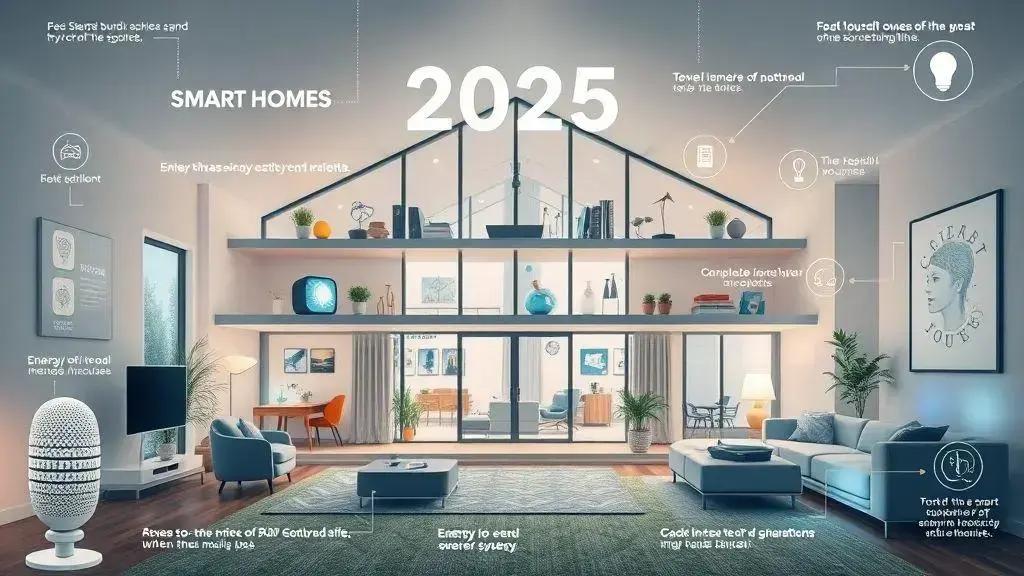
Trends shaping smart homes in 2025 are evolving rapidly, making homes more intuitive and efficient. These trends are driven by advancements in technology and the growing demand for convenience.
Integration of artificial intelligence
One of the key trends is the use of artificial intelligence (AI). AI enables smart home devices to learn from your behavior. This means they can adjust settings automatically based on your preferences, creating a more personalized living experience.
- Devices can anticipate your needs, such as adjusting the lighting when you enter a room.
- AI can analyze energy usage patterns to suggest improvements.
- AI assistants can communicate with multiple devices, streamlining control.
- This integration enhances overall home automation.
Another significant trend is the focus on sustainability. Smart homes are increasingly designed to be energy-efficient. For example, smart thermostats optimize heating and cooling, reducing energy consumption. Homes equipped with solar panels can manage energy use more effectively, utilizing renewable energy sources.
Additionally, the rise of voice recognition technology is reshaping how we interact with our homes. Instead of relying on apps, homeowners can control devices using simple voice commands. This trend is changing the dynamics of convenience and accessibility.
Security advancements
Security is also a major concern, leading to innovations in smart security systems. These systems now feature advanced surveillance, motion sensors, and real-time alerts. They provide an extra layer of protection, allowing homeowners to monitor their property from anywhere.
Wearables are becoming part of the smart home ecosystem as well. Smartwatches and fitness trackers can sync with home devices, enabling users to control aspects of their home right from their wrist. This integration adds another level of convenience.
As we approach 2025, trends like these will continue to shape the future of smart homes, driving innovation that prioritizes user experience, security, and efficiency.
How to choose the right smart devices
How to choose the right smart devices involves understanding your needs and knowing what features to look for. Since the market offers many options, it can be overwhelming. However, with a clear approach, you can make informed choices.
Identify your needs
Start by identifying what you want to achieve with smart devices. Are you looking for convenience, security, or energy efficiency? Knowing your priorities helps narrow your options significantly.
- Convenience: Think of devices that automate daily tasks.
- Security: Consider smart locks and cameras for peace of mind.
- Energy efficiency: Look for smart thermostats and lighting systems that save energy.
Next, check compatibility with existing devices. Ensure that any new smart device can communicate with your current system. Most devices work well with major platforms like Amazon Alexa, Google Assistant, or Apple HomeKit.
Research product features
When considering specific devices, research the features they offer. Look for devices that are user-friendly and have clear instructions. Features to consider include:
- Remote access via mobile apps.
- Voice control options through virtual assistants.
- Automation capabilities to set schedules or routines.
- Integration with other smart home products.
Additionally, read reviews and ratings from other users. This feedback can provide valuable insights into the performance and reliability of the devices. Look for products that consistently receive positive feedback.
Price is also a crucial consideration. Determine your budget before browsing. While it can be tempting to go for the cheapest option, weigh quality against cost. Sometimes investing a bit more can lead to better durability and performance.
After evaluating your needs, compatibility, features, and budget, you’ll be well-equipped to select the right smart devices for your home. This strategic approach ensures that your choices enhance your daily life while meeting your expectations.
Integrating smart tech into your daily life
Integrating smart tech into your daily life can significantly enhance convenience and efficiency. As more smart devices become available, knowing how to use them effectively is essential to improve your lifestyle.
Start with the basics
Begin by introducing a few essential smart devices. A smart speaker can be a great starting point. It can help you manage tasks, play music, and control other smart devices through voice commands.
- Smart lights can be controlled remotely, allowing you to set the mood at home.
- Smart thermostats adjust temperatures for comfort and energy savings.
- Smart plugs can turn any appliance into a smart device, letting you control them easily.
Once you have a few devices, think about how they can work together. Creating routines can enhance their functionality. For example, you can set a routine that turns on the lights and starts your coffee maker automatically in the morning.
Enhancing security and comfort
Integrating security systems is another way to use smart technology effectively. Smart cameras and doorbells allow you to monitor your home from anywhere. You can receive alerts on your phone every time there’s movement, giving you peace of mind.
Additionally, smart blinds or curtains can be automated to open and close at specific times, providing privacy and energy efficiency. Imagine waking up to natural light without needing to get out of bed!
Regularly explore new features and updates for your devices. Most manufacturers provide updates that add functionalities and improve performance. Staying informed allows you to make the most of your smart technology.
Integrating smart tech into your daily life makes tasks easier and helps create a connected home environment that works for you. The key is to start simple, gradually adding more devices as you get comfortable. With a little planning, smart technology can transform how you live.
\n
\n
\n
FAQ – Frequently Asked Questions About Integrating Smart Tech into Your Daily Life
What are the basic smart devices I should consider first?
Start with essential devices like smart speakers, smart lights, and smart thermostats to enhance convenience in your home.
How can I ensure my smart devices work together effectively?
Check for compatibility with major platforms like Amazon Alexa or Google Assistant, and look for devices that support the same ecosystem.
What is the best way to automate routines at home?
You can set routines that control multiple devices at once, like turning on lights and starting your coffee maker with a single command.
How do smart security systems improve home safety?
Smart security systems include features like real-time alerts, surveillance cameras, and smart locks, allowing you to monitor your home from anywhere.