Green roofs and walls enhance urban environments by improving energy efficiency, supporting biodiversity, and managing stormwater, making cities more sustainable and livable.
Green roofs and walls are becoming increasingly popular in urban landscapes. Have you ever wondered how these green features can transform cities? They not only beautify spaces but also improve air quality and provide insulation.
Understanding green roofs and walls
Understanding green roofs and walls is essential to grasp how they improve our urban environments. These innovative structures not only provide an appealing aesthetic but also contribute significantly to sustainability.
Green roofs involve layering plants, soil, and vegetation on top of buildings. This green layer helps insulate buildings, reducing energy costs and enhancing comfort. In contrast, green walls, also known as vertical gardens, incorporate plants directly attached to walls. They can transform dull surfaces into live artworks.
Benefits of green roofs
Implementing green roofs comes with various advantages. Here are a few key benefits:
- Energy efficiency: They provide natural insulation, helping keep buildings cooler in summer and warmer in winter.
- Stormwater management: Green roofs absorb rainwater, reducing runoff and minimizing flooding.
- Air quality improvement: Vegetation filters pollutants and improves overall air quality.
- Biodiversity support: They create habitats and promote biodiversity in urban settings.
Green walls, while different, also offer numerous perks. They can enhance property values and improve aesthetics in otherwise lifeless areas. Plus, they help with temperature regulation in buildings.
Choosing the right plants
Selecting suitable plants is a crucial component of the success of green roofs and walls. Drought-resistant plants are often preferred, as they require less water and thrive in these conditions. Some popular choices include succulents, sedums, and native grasses. Incorporating a mix of plants can also enhance biodiversity, attracting pollinators and other beneficial species.
Using innovative irrigation systems ensures that plants receive adequate moisture. Drip irrigation and rainwater harvesting are two efficient methods that complement these green structures.
When properly designed, green roofs and walls can significantly reduce the urban heat island effect. By cooling cities, they can create more pleasant living spaces for residents.
Overall, understanding and utilizing these green solutions can lead to healthier, more beautiful urban areas, benefiting both people and the planet.
Benefits for energy efficiency
Understanding the benefits of green roofs and walls for energy efficiency can transform how we view urban living. These structures not only enhance aesthetics but also play a crucial role in reducing energy consumption.
By providing natural insulation, green roofs keep buildings cooler in summer and warmer in winter. This leads to significant savings on heating and cooling costs. The layers of soil and vegetation act as a barrier, limiting heat transfer and reducing the demand for energy.
How green roofs contribute to energy savings
- Temperature regulation: They help maintain a consistent indoor temperature, making heating and cooling systems less necessary.
- Reduced heat gain: The green layer absorbs sunlight, preventing heat from penetrating buildings.
- Lower energy bills: With reduced reliance on HVAC systems, homeowners and businesses experience lower monthly energy costs.
Moreover, green walls also offer substantial energy benefits. These vertical gardens can cool the building’s exterior, reducing the need for air conditioning. By enhancing green spaces, they create a microclimate that can further decrease energy use.
Implementing these green features can also lead to benefits beyond just savings. Increased energy efficiency not only reduces costs but also decreases greenhouse gas emissions, contributing positively to environmental sustainability.
Investing in green roofs and walls is not just a trend; it’s a practical solution for energy efficiency that can yield long-term benefits. As cities grow, optimizing energy usage will be crucial for a sustainable future.
Enhancing urban biodiversity
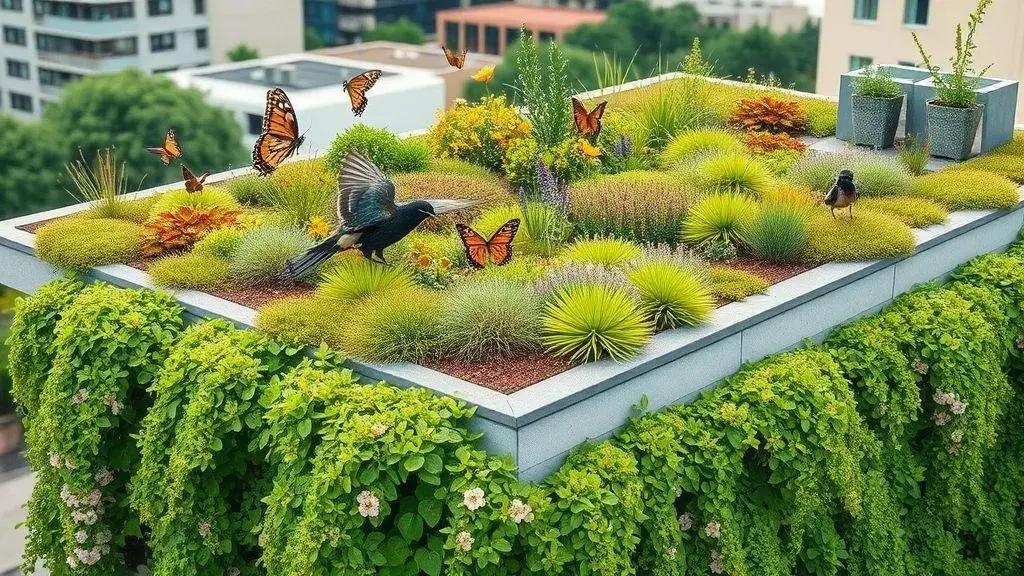
Enhancing urban biodiversity through green roofs and walls is a vital aspect of creating healthier ecosystems in cities. These living structures provide habitats for various species and significantly contribute to urban wildlife.
Green roofs offer a unique environment for birds, butterflies, and other wildlife. By incorporating native plants, these roofs attract pollinators, improving biodiversity in densely populated areas. Green walls also serve as vertical gardens and can be populated with flowering plants that support various insects.
The role of native plants
Using native plants is crucial for supporting local wildlife. These plants are adapted to the local climate and soil conditions, making them resilient and low maintenance. Native vegetation promotes the growth of beneficial insects, which can lead to healthier plant ecosystems.
- Provide food sources: Many native plants produce seeds, nectar, and pollen that attract and nourish local species.
- Create habitats: They offer shelter and breeding grounds for various birds and insects.
- Support ecosystem services: Healthy plant communities can improve soil quality and water retention.
Moreover, integrating green roofs and walls into urban architecture creates corridors for wildlife, allowing species to move between different habitats. This connectivity is essential for promoting genetic diversity among urban populations.
Urban areas often suffer from habitat fragmentation. Green roofs and walls help alleviate this issue by offering more green space in concrete jungles. By enhancing urban biodiversity, these structures contribute to improved air quality, reduced heat island effects, and a better overall environment for city inhabitants.
Maintenance tips for green structures
Maintenance tips for green structures are essential for ensuring the longevity and health of green roofs and walls. Regular upkeep helps these structures thrive and continue to provide their numerous benefits.
One key aspect of maintenance is watering. While many plants used in green roofs are drought-tolerant, they still need adequate moisture, especially in their early growth stages. It’s crucial to monitor soil moisture levels to ensure plants receive enough water without overwatering.
Regular inspections
Conducting routine inspections is vital for identifying issues early on. Look for signs of weed growth or any dead plants that may need replacement. Weeds can steal nutrients from the desired plants, so keeping them at bay is important. Additionally, check for drainage problems, as clogged drains can lead to water pooling, which can harm the plants.
- Remove debris: Regularly clear leaves and debris that may accumulate on the green structure.
- Inspect plants: Look for pests or diseases and take appropriate action if found.
- Replenish soil: Over time, nutrients can deplete, so adding organic matter is beneficial for plant health.
Another important maintenance aspect is ensuring proper sunlight exposure. If nearby trees or structures limit sunlight, consider trimming or adjusting them to allow adequate light for your green plants to flourish. Pruning the plants helps manage growth and encourages flourishing vegetation.
Furthermore, fertilizing your green structures during the growing season can boost plant health. Use organic fertilizers to provide essential nutrients and support resilient plant growth. Healthy plants are better equipped to survive environmental stressors.
Innovative designs around the world
Innovative designs around the world showcase the beauty and functionality of green roofs and walls. These structures not only add appeal to urban spaces but also serve important environmental purposes.
One notable example is the Bosco Verticale in Milan, Italy. This residential complex features two towers adorned with over 9,000 trees and countless plants. The design improves air quality, provides insulation, and even reduces sound pollution. It’s a stunning example of how architecture can harmonize with nature.
Other remarkable projects
In Singapore, the Marina Bay Sands stands out with its iconic sky park. This innovative design integrates a large green space atop three interconnected towers. Visitors can enjoy stunning views while surrounded by lush vegetation, emphasizing urban biodiversity.
- The Eden Project in the UK: This environmental complex features geodesic domes housing diverse plant species from different climates, promoting ecological awareness.
- One Central Park in Sydney: This residential complex incorporates vertical gardens designed by renowned landscape architect Patrick Blanc, enhancing the urban landscape.
- Tokyo’s Shibuya Sky: Offers rooftop gardens paired with observatory decks, blending greenery with breathtaking city views.
These designs not only highlight the aesthetic value of green structures but also encourage sustainability and environmental stewardship. By incorporating nature into urban living, these projects pave the way for future developments that prioritize biodiversity and ecological balance.
Green roofs and walls have the potential to transform urban environments globally. With creativity and innovation, cities can become more livable, sustainable, and beautiful.
green roofs and walls into urban design has immense potential to enhance environmental sustainability. These innovative structures improve energy efficiency, support biodiversity, and create more pleasant living spaces. By looking at successful projects worldwide, it becomes clear that the future of cities can be greener and more vibrant. As we embrace these designs, we contribute to healthier environments and a sustainable future for generations to come. Together, we can transform urban spaces into thriving ecosystems.
FAQ – Frequently Asked Questions about Green Roofs and Walls
What are green roofs and how do they work?
Green roofs are layers of vegetation planted on rooftops. They work by providing insulation, absorbing rainwater, and supporting local wildlife.
What benefits do green walls provide?
Green walls enhance building aesthetics, improve air quality, and provide insulation, making buildings more energy-efficient.
How do green roofs contribute to urban biodiversity?
Green roofs create habitats for various species, including birds and insects, helping to increase biodiversity in urban areas.
What maintenance do green structures require?
Green structures need regular inspections, watering, weeding, and periodic fertilization to ensure healthy plant growth and functionality.