5G technology rollout significantly enhances connectivity, enabling faster speeds, lower latency, and connectivity for more devices, while also presenting challenges in infrastructure, security, and access equity.
5G technology rollout is not just a buzzword; it’s reshaping the way we interact with technology every day. Have you noticed the increasing speeds on your devices? In this article, we’ll dive into what this means for you and the world around us.
Understanding the basics of 5G technology
Understanding 5G technology can seem overwhelming, but it’s crucial in today’s digital landscape. This new generation of wireless technology promises to bring faster speeds and improved connectivity to millions around the world.
What Makes 5G Different?
5G technology is not just an upgrade from 4G. It uses higher frequency bands which allow for greater data transmission. This results in significantly faster download and upload speeds, as well as reduced latency.
Key Features of 5G Technology
- Faster Speeds: 5G can deliver speeds up to 100 times faster than 4G.
- Lower Latency: With reduced latency, applications respond almost instantly.
- Increased Capacity: 5G can support more devices simultaneously without slowing down.
- Enhanced Reliability: Provides a much more stable connection, which is essential for things like remote surgery.
These features open up a world of possibilities. Imagine downloading your favorite movie in seconds or streaming high-definition videos without buffering. 5G technology enables new applications in diverse fields, from healthcare to smart cities.
Moreover, the infrastructure for 5G is being rolled out globally, which means you will soon see its benefits in everyday life. Carriers are working hard to set up the necessary networks, ensuring that users will have access to this exciting technology.
As 5G continues to develop, it presents both opportunities and challenges. For example, while the technology promises much, it also requires substantial investment in new networks and devices. Understanding how this rollout impacts society is key.
Benefits of 5G connectivity
The benefits of 5G connectivity are vast and impactful in our daily lives. With this new technology, users can expect a significant boost in speed and reliability.
Enhanced Speed and Efficiency
One of the most noticeable advantages of 5G is its speed. 5G networks can achieve download speeds up to 10 Gbps, which is incredibly fast compared to 4G. This means less waiting time while downloading content or streaming videos. For gamers and streamers, this translates to a more immersive experience with less lag.
Improved Connectivity for More Devices
5G can connect many more devices at once, thanks to its advanced network design. The increased capacity means that users in crowded places, like concerts or stadiums, can still enjoy high-quality connections. More devices can communicate without slowing down the network, supporting the growing trend of the Internet of Things (IoT).
- Smart Cities: 5G technology can significantly enhance urban living by connecting traffic lights, public transportation, and utilities.
- Remote Work: With smooth and fast connections, 5G enables easier remote work with high-quality video calls and real-time collaboration.
- Healthcare Innovations: 5G can facilitate telemedicine, allowing doctors to provide more effective care remotely.
Additionally, the low latency of 5G allows for real-time communication, which is crucial for applications where timing is everything. This is especially important in areas like autonomous vehicles, where any delay could be dangerous. As 5G continues to spread, its applications in various fields will only grow.
While the journey of implementing 5G technology has its challenges, its benefits will likely change how we interact with technology each day. From everyday conveniences to revolutionary changes in industries, the potential is enormous.
Key challenges in the rollout process
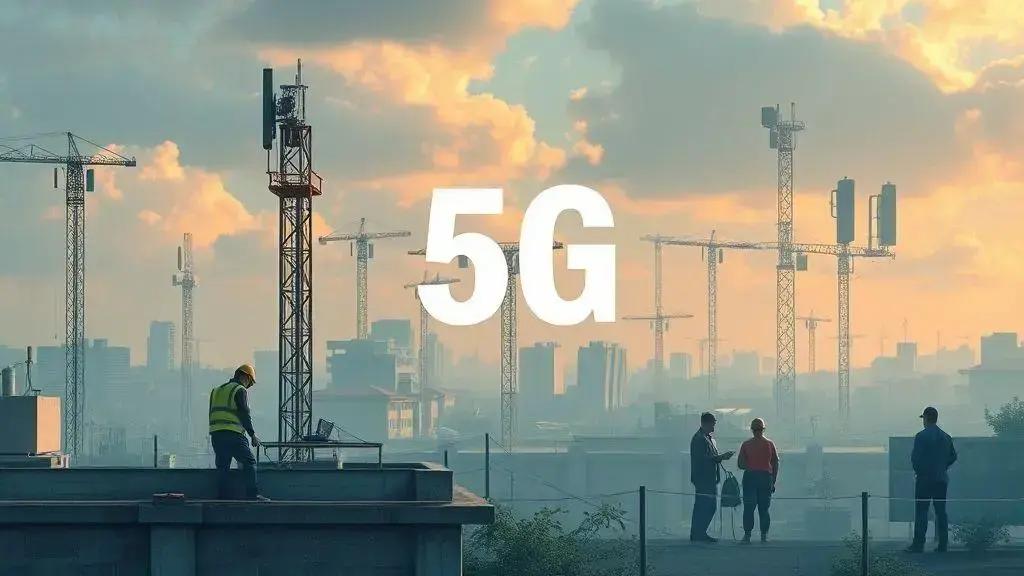
The rollout of 5G technology presents several key challenges that must be addressed to maximize its benefits. As this new technology begins to integrate into existing infrastructures, various hurdles arise.
Infrastructure Limitations
One of the main challenges is the need for extensive infrastructure upgrades. Unlike previous generations, 5G requires a denser network of antennas to function effectively. This means that carriers must invest heavily in creating more sites to ensure coverage, particularly in urban areas.
Regulatory Hurdles
The rollout is also affected by regulatory issues. Different countries have varied policies regarding spectrum allocation. These regulations can slow down the deployment process, as telecom companies often have to navigate complex legal landscapes.
- Coordination between agencies: Governments and local authorities must work together to manage the use of public spaces for new infrastructure.
- Permitting process: The time and costs involved in acquiring permits can delay progress.
- Health and safety concerns: Public debates around the safety of 5G technology can lead to hesitation in deployment.
Another challenge is the competition among carriers. As telecom companies rush to establish themselves as leaders in the 5G market, they can face difficulties in differentiating their services. Marketing strategies must evolve to highlight unique features effectively.
Moreover, consumer awareness presents a significant obstacle. There remains a need for education about what 5G technology offers and how it differs from previous generations. Misconceptions about speed and reliability can lead to skepticism from potential users.
Lastly, cybersecurity is an ever-growing concern. As more devices connect to the 5G network, the risk of cyber attacks increases. Ensuring robust security measures will be vital for gaining public trust.
How 5G technology impacts industries
5G technology impacts industries in significant ways, transforming operations and enhancing efficiency. This new generation of wireless technology enables faster data transfer, making processes smoother and more effective.
Impact on Healthcare
In healthcare, 5G technology is revolutionizing patient care. With faster connections, doctors can perform telemedicine consultations more effectively. The ability to transmit high-resolution images quickly can help in the diagnosis and treatment of illnesses. Additionally, devices connected to 5G networks can monitor patients in real-time, leading to better health outcomes.
Advancements in Manufacturing
In the manufacturing sector, 5G technology facilitates automation and smart factories. Machines that communicate over 5G networks can operate more efficiently, reducing downtime and improving productivity. Manufacturers can utilize real-time data to make informed decisions and enhance supply chain management.
- Remote Monitoring: Equipment can be monitored remotely, allowing for timely maintenance and repairs.
- Improved Logistics: Streamlined processes save time and resources, from production to delivery.
- Enhanced Safety: Connected devices can alert workers to potential hazards, improving safety on the factory floor.
5G also plays a vital role in the entertainment industry. Streaming services can deliver high-quality content without buffering, providing an enhanced viewing experience. The integration of augmented reality (AR) and virtual reality (VR) applications becomes seamless, allowing for immersive virtual experiences.
The automotive industry benefits significantly from 5G as well. Connected cars can communicate with one another to prevent accidents and improve traffic management. Features such as real-time navigation and updates on road conditions rely heavily on the speed and reliability offered by 5G technology.
Overall, the impact of 5G technology on these industries not only drives innovation but also sets the stage for future advancements. As businesses adapt and evolve, the integration of 5G will be essential in staying competitive in a fast-changing market.
The future of 5G and beyond
The future of 5G technology holds tremendous promise and potential, paving the way for innovations that could reshape our world. As this technology matures, we can expect even more advancements that build on the foundation that 5G has established.
Expansion of Applications
With improved speeds and low latency, 5G will enable new applications and services that were not possible before. Industries will explore exciting possibilities, such as smart cities where everything from traffic systems to public safety is interconnected. Imagine a city that can seamlessly manage its resources, reducing energy waste and enhancing residents’ quality of life.
Evolution of Internet of Things (IoT)
The evolution of the Internet of Things will accelerate with 5G. With its ability to connect a vast number of devices simultaneously, 5G will enhance automation in homes and businesses. Smart appliances will work together to improve energy efficiency and convenience.
- Smart Homes: Devices that communicate in real-time for better control and efficiency.
- Healthcare Monitoring: Wearable devices that continuously track health metrics and provide real-time feedback to users and healthcare providers.
- Autonomous Vehicles: Cars that can communicate with each other and traffic infrastructure for safer navigation.
Furthermore, 5G is expected to revolutionize entertainment. Users will be able to stream high-definition content virtually anywhere, with minimal delays. Gaming experiences will become more immersive, with cloud gaming services that leverage the speed of 5G to deliver rich graphics without needing advanced local hardware.
As 5G technology continues to develop, it will also face challenges. Ensuring security in a highly connected world will be crucial. As more devices connect to networks, the potential for cyber threats increases. Therefore, robust security measures must evolve alongside technology to protect users.
Additionally, there will be ongoing discussions about digital equity. Access to 5G services must be equitable to ensure that all communities benefit from its advancements. The focus will be on expanding coverage to rural and underserved areas.
FAQ – Frequently Asked Questions about 5G Technology
What is 5G technology?
5G technology is the fifth generation of mobile networks, offering faster speeds, lower latency, and the ability to connect more devices simultaneously.
How does 5G impact industries?
5G technology impacts industries by enhancing efficiency, enabling automation, and providing faster real-time data transmission, which benefits sectors like healthcare, manufacturing, and entertainment.
What are the challenges of rolling out 5G?
The challenges include the need for extensive infrastructure upgrades, regulatory hurdles, cybersecurity concerns, and ensuring equitable access to the technology.
What is the future of 5G and beyond?
The future of 5G includes advancements in smart cities, the Internet of Things (IoT), and enhanced entertainment options, as well as addressing security and digital equity issues.